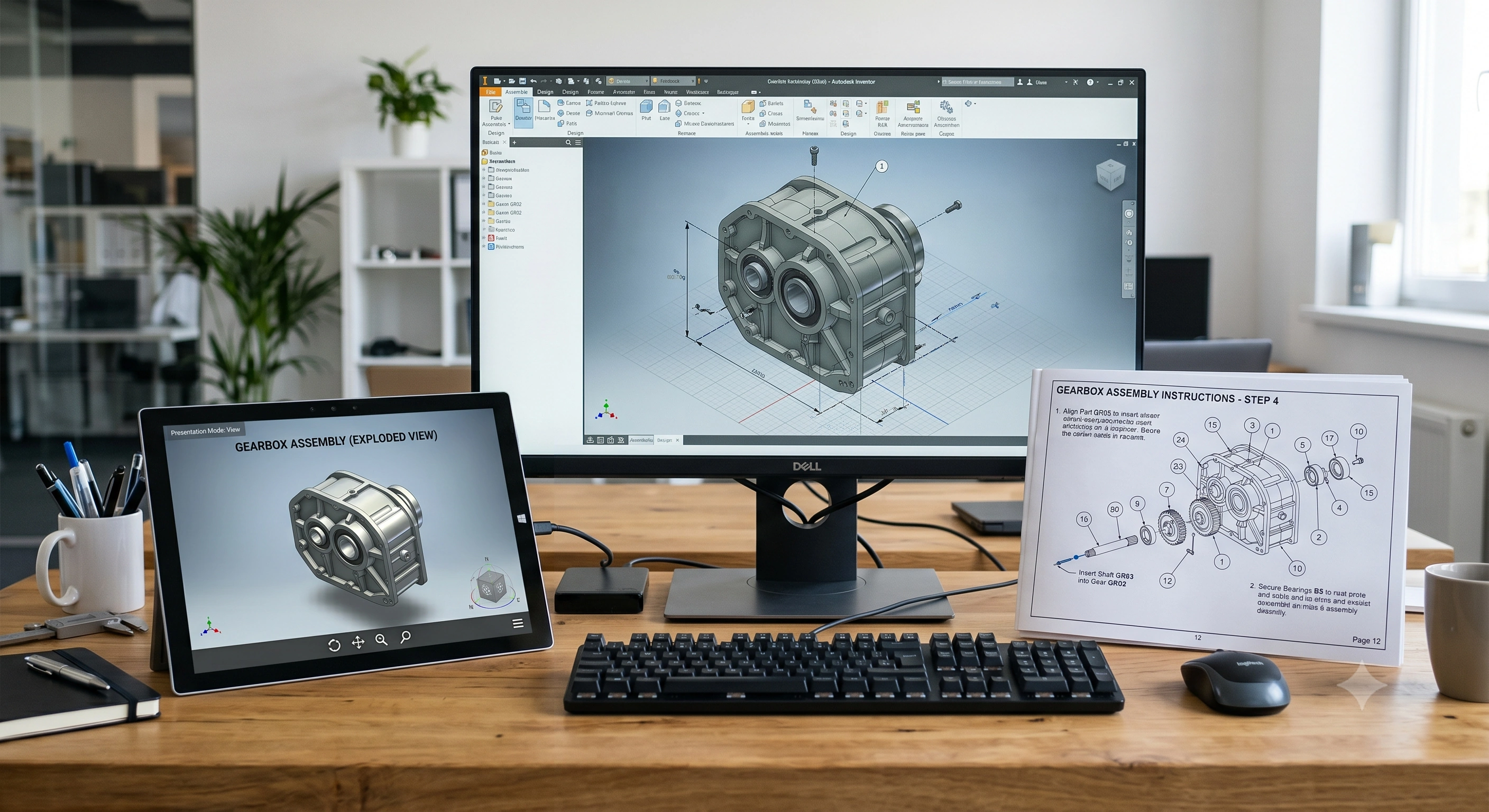
Technical authors can create exploded views, service manuals, assembly instructions and illustrations without rebuilding content from scratch. For many organisations, Composer remains a mature and capable solution.
Cadasio approaches the challenge from a different direction.
Instead of focusing primarily on generating assets, it focuses on delivering interactive experiences based on engineering data.
This distinction becomes increasingly important as documentation requirements evolve.
Historically, technical communication centred on creating documents. Once published, those documents were distributed to users. Success depended on how accurately the author anticipated the user's needs.
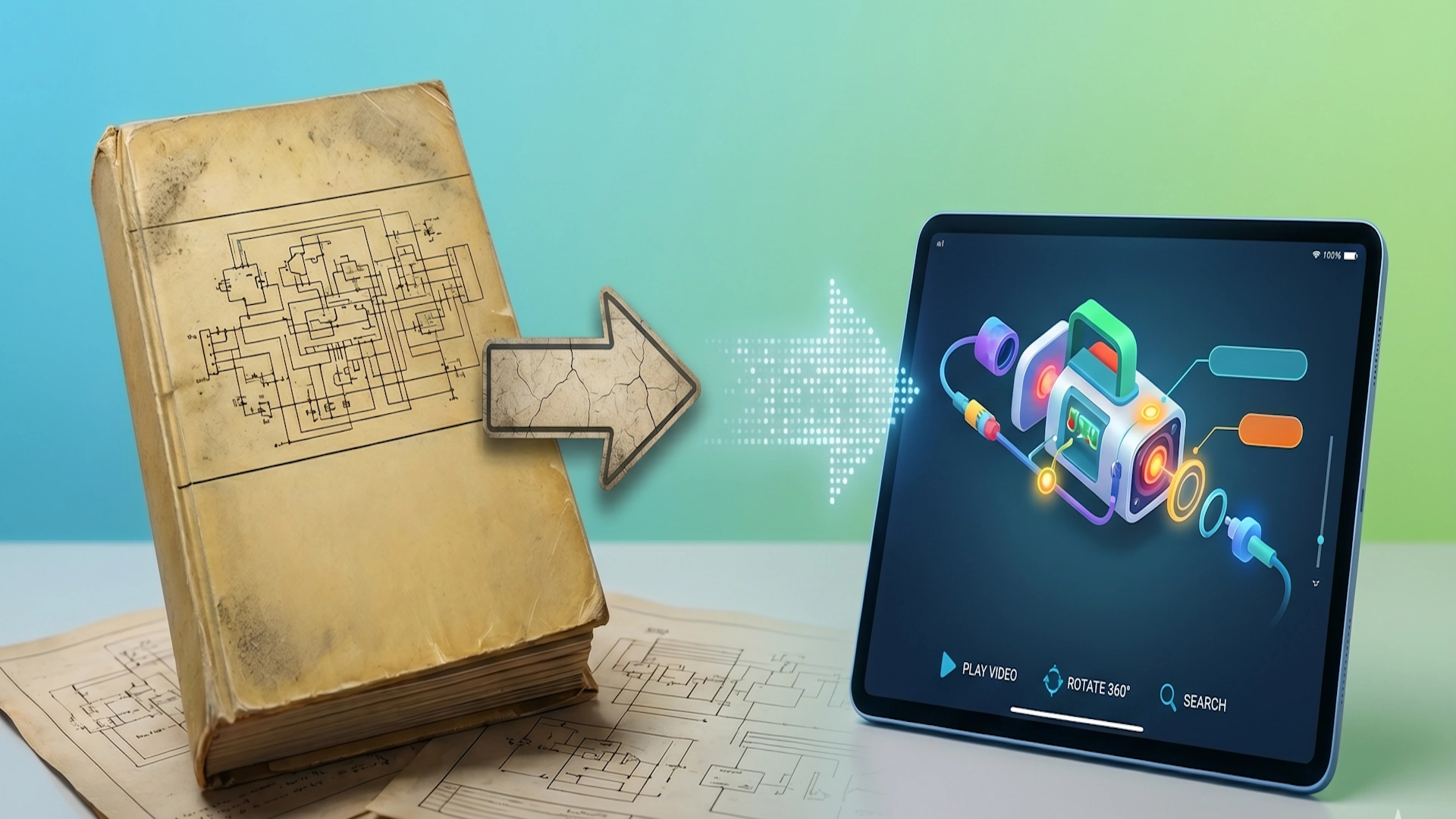
Modern documentation increasingly operates in a different environment. Users expect self-service access, mobile compatibility and interactive content. They want to inspect products rather than simply view representations of them.
This creates a limitation for traditional documentation workflows.
Every static illustration represents a decision made by the author. The author determines the viewpoint, level of detail and sequence of information. If the user needs a different perspective, additional content must be produced.
Technical authors often compensate for this by generating large numbers of supporting assets. A complex assembly may require dozens of views, detail callouts and supplementary diagrams.
The maintenance burden can become substantial.
Engineering changes frequently expose this issue. A relatively small design modification may require updates across multiple documentation assets. As documentation libraries grow, maintaining consistency becomes increasingly difficult.
Interactive documentation reduces this dependency on static content.
With Cadasio, the model itself remains available to the user. Procedures can still be guided and structured, but users are free to explore the product when additional context is required.
This is particularly valuable for manufacturing, service and training applications. Users can rotate assemblies, inspect hidden features and develop a clearer understanding of component relationships.
The comparison therefore extends beyond features.
Composer transforms CAD data into documentation assets.
Cadasio transforms CAD data into interactive documentation experiences.
Neither approach is inherently wrong. The question depends on the needs of the organisation and its users.
For companies whose documentation strategy is built around PDFs, images and printed manuals, Composer continues to provide value.
For companies seeking browser-based instructions, QR-code-linked procedures and interactive product communication, Cadasio addresses challenges that traditional static workflows were never designed to solve.
The most significant shift is not technological. It is conceptual. Documentation is no longer viewed solely as something that is published. Increasingly, it is something users interact with directly.